Business process automation.
When a process depends on copying information, reviewing files, updating statuses, sending reminders or repeating the same validations again and again, there is probably an opportunity to automate part of the work.
Lyrvanta designs automation to reduce manual tasks and rework without removing the controls, exceptions and human decisions that the operation actually needs.
SIGNS OF FRICTION
The signal is not always “we need more software.”
Many automation opportunities start with fairly ordinary symptoms.
Someone downloads information from one system to upload it into another.
Someone consolidates several files before preparing a report.
A document must move manually through different people.
The same data is validated several times.
A critical task depends on someone remembering to execute it.
The team spends time asking what stage each request is in.
The information exists, but it is distributed across systems, files and email.
The problem is not necessarily a lack of technology.
Sometimes the technology already exists, but there is still too much human work between one stage and the next.
GOOD CANDIDATES
Which processes are good candidates for automation?
A process becomes especially interesting when it combines several of these characteristics:

It happens frequently
The same activities occur again and again following relatively stable logic.
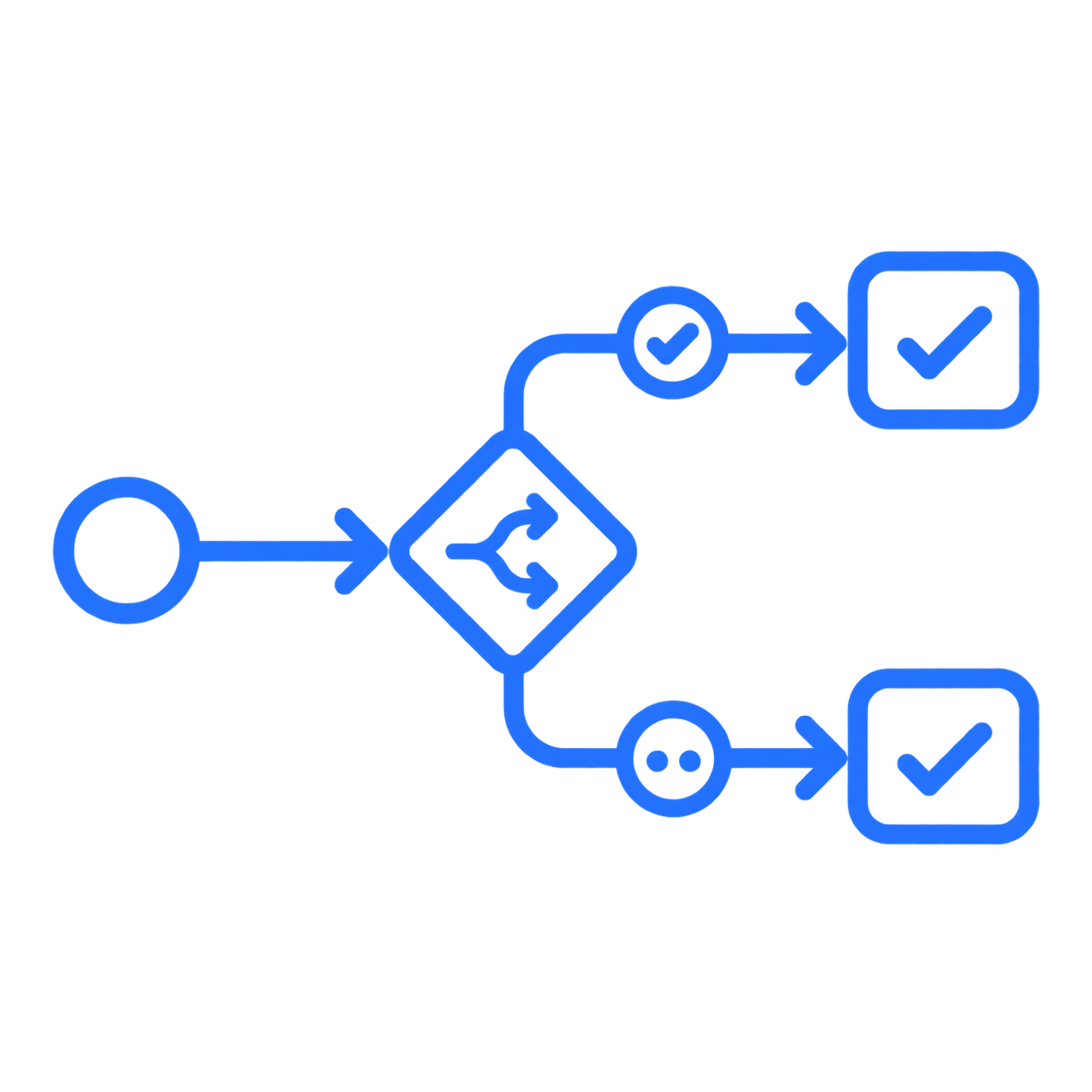
It uses identifiable rules
There are conditions that can be expressed clearly: if A happens, validate B; if C is met, continue; if an exception appears, escalate.
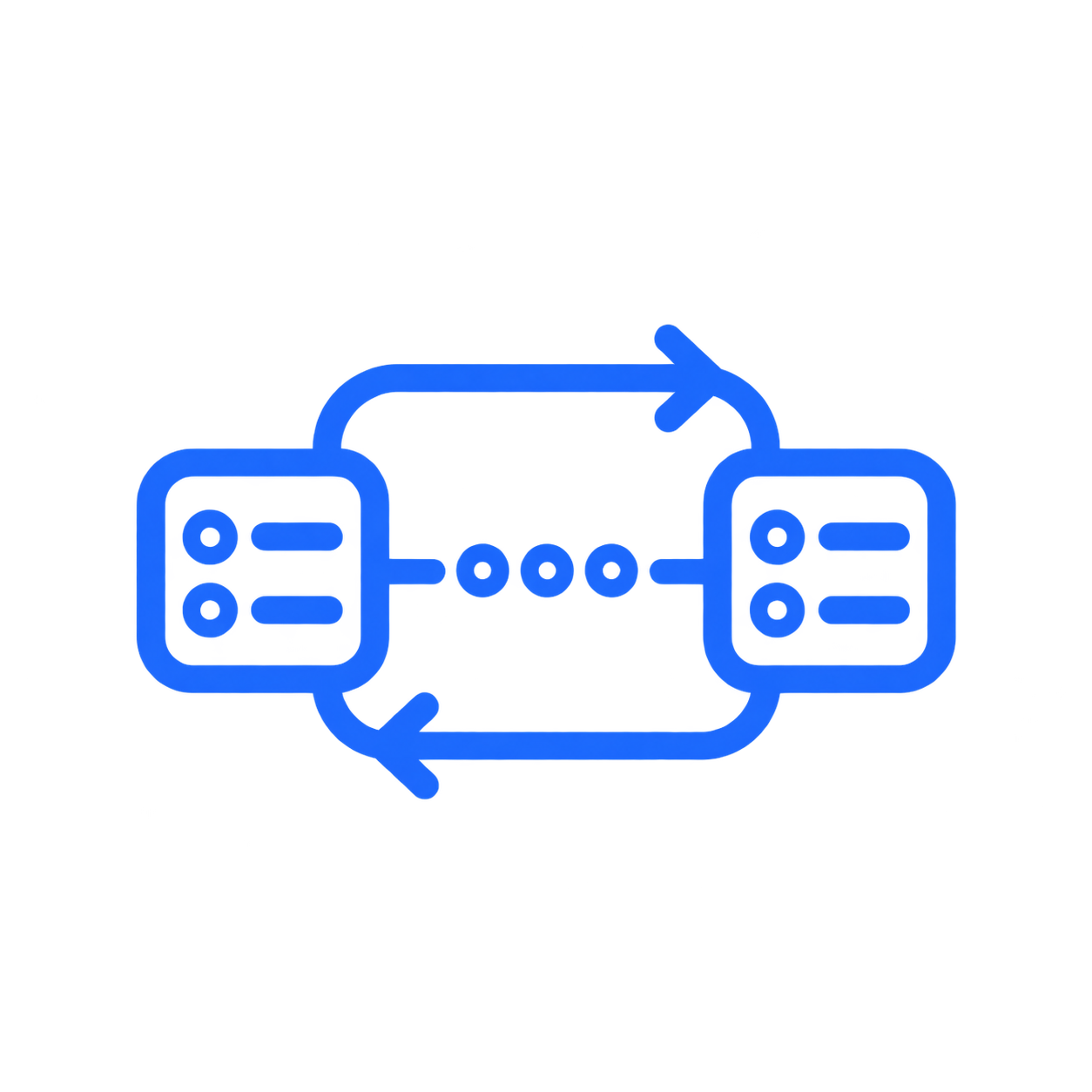
It moves information between different places
Email, spreadsheets, applications, databases, documents or business systems.

It consumes time without adding a new decision
The person is carrying out mechanical tasks rather than applying knowledge or judgment.

Manual errors create rework
Duplicate entry, incomplete information, wrong files, inconsistent statuses or forgotten steps.

It requires constant follow-up
People asking what happened, who has a request or what the next step is.
When several of these signals appear together, the process is worth analyzing.
PRACTICAL RESOURCE
Which processes should you automate first?
Evaluate opportunity, readiness, risk and economic fit before committing to an intervention.
OPERATIONAL JUDGMENT
Automation does not mean automating everything.
Poor automation can turn a confusing process into a confusing process that now runs faster.
That is why we do not start by asking: “Which tool should we use?”
We start by asking: “How does this process actually work?”
Some activities can run automatically. Others require validation. Others need approval. And some must remain under human judgment.
The goal is not to remove people from the process. It is to prevent them from spending time on tasks that a technology solution can perform reliably and verifiably.
METHOD
How we approach automation
01We understand the current flow+
We identify participants, systems, documents, inputs, outputs, rules and exceptions. We do not design around an imagined process.
02We identify the cost of friction+
We look for where manual work concentrates, what creates rework, where errors appear and which activities repeatedly consume time.
03We separate rules from decisions+
We determine what can run automatically and what needs human intervention.
04We review existing systems+
Before building another tool, we verify what can already be used. The best project may be the one that avoids replacing something that already works.
05We design the future flow+
We define what starts the process, what information it needs, what validations it performs, what happens when an error occurs, which exceptions are escalated and what evidence must remain recorded.
06We implement and validate+
Automation is tested against real scenarios, including errors and exceptions. It is not enough for the perfect path to work.
07We measure and evolve+
Evolution should respond to results and real needs, not to adding features by inertia.
INTEGRATION
Integration before duplicate data entry
Many automations depend on systems that already exist. When a structured and authorized way to connect those systems exists, our priority is to use it.
A suitable integration can eliminate entire stages of manual work without forcing the main platform to be replaced.
ARTIFICIAL INTELLIGENCE
And when does artificial intelligence enter?
Not every automation needs AI. Processes based on clear rules are often more reliable when they use deterministic mechanisms.
The question is not “Where can we put AI?”. The question is: “What capability does this process actually need?”
TRACEABILITY
Control before blind automation
Business automation should be able to answer simple questions:
What happened?
When did it happen?
With what information?
Which rule was executed?
What failed?
What requires human intervention?
That is why traceability, error handling, recovery and control are part of the solution from the design stage. They should not be added after the system is already in production.
DECISION
How to define the right first step
×If the process still changes every day+
We can start by stabilizing the part that changes most or intervene first where repeatable logic already exists.
×If the rules are not explicit yet+
Making rules, ownership and exceptions explicit can be the first intervention.
×If frequency is low+
Frequency alone does not decide. We review time per case, cost, criticality, risk and consequences before defining scope.
×If the real problem is somewhere else+
Move the intervention to the real bottleneck: another stage, process, area, policy, decision or dependency.
×If an existing tool already solves part of the problem well+
Use what already works and delimit only the friction that continues to consume value.
CONTROLLED SCOPE
Automation can start small
We do not need to start by transforming an entire operation. One concrete process may be enough. One stage. One integration. One recurring validation. One consolidation. One document flow.
What matters is selecting a problem where technological intervention makes sense and can be introduced in a controlled way. Then we decide whether expansion is worthwhile.
NEXT STEP
Show us the process that consumes too much time today
You do not need to define the solution before speaking with us. Show us what happens, who participates, which systems are involved, what work repeats and where the friction appears.
We can help determine whether the problem needs automation, integration, custom software or simply a much smaller intervention.